
When Realism Evolves
Realism has long been one of the most respected styles in tattooing. The ability to recreate a face, an animal, or a meaningful moment with photographic precision demands discipline, technical control, and a refined understanding of light, shadow, and composition. When executed well, realism is powerful on its own — timeless, direct, and deeply personal.
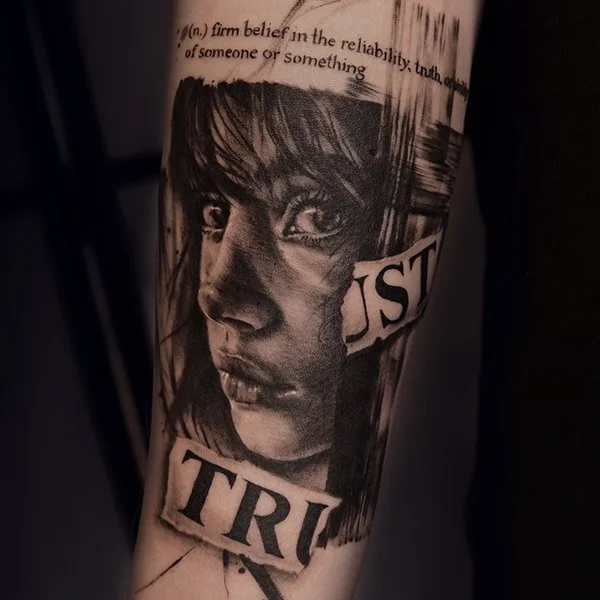
At the same time, some artists are beginning to explore what happens when realism becomes a starting point rather than a fixed boundary. Not because it needs improvement, but because it offers such a strong foundation.
In these pieces, a portrait might gently dissolve into abstract textures. A realistic figure may intersect with geometric structure. Certain areas remain precise and detailed, while others feel looser, softer, more interpretative.
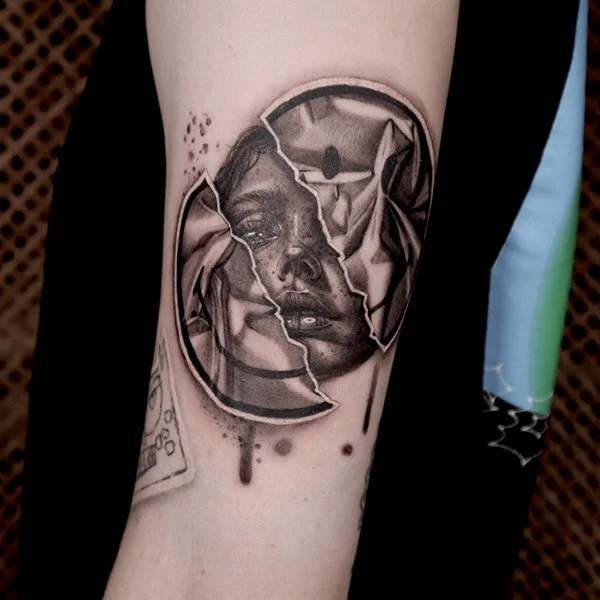
The result isn’t a rejection of tradition. It’s a conversation between precision and expression. The realism grounds the piece, while additional elements introduce movement, contrast, or symbolism. Together, they create depth — both visually and conceptually.
Realism remains the core.
The exploration simply expands what it can become.
